

 Leveraged & Inverse
Key Takeaways
- Shifting expectations for inflation, growth and real yields can move long-term Treasurys in either direction, making flexibility increasingly important amid renewed bond-market volatility.
- ProShares offers inverse and leveraged Treasury ETFs designed to help investors navigate long-term Treasury yields, whether they expect rates to rise or fall.1
 |
 |
 |
 |
Yields can move in either direction
Long-term U.S. Treasury yields reflect expectations for economic growth, inflation and monetary policy, as well as the compensation investors demand for holding longer-dated maturities. A Federal Reserve pause alone is unlikely to determine where long-term yields go next.
Long-term Treasury yields could rise if investors demand higher real yields—the yields available after accounting for expected inflation. A largely resilient economy, stubborn inflation, and a hawkish Fed could support higher yields as well.
Yields could fall if inflation cools more quickly than anticipated, growth or employment weakens, or investors seek the relative safety of Treasurys during periods of market stress.
Flexibility matters when bonds are volatile
Increasing bond-market volatility reinforces the value of flexibility. The MOVE Index—which measures expected volatility in U.S. Treasury bond yields over the next month—rose by more than 50% in the year ended October 30, 2026, from approximately 66 to 100.
ICE BofA MOVE Index
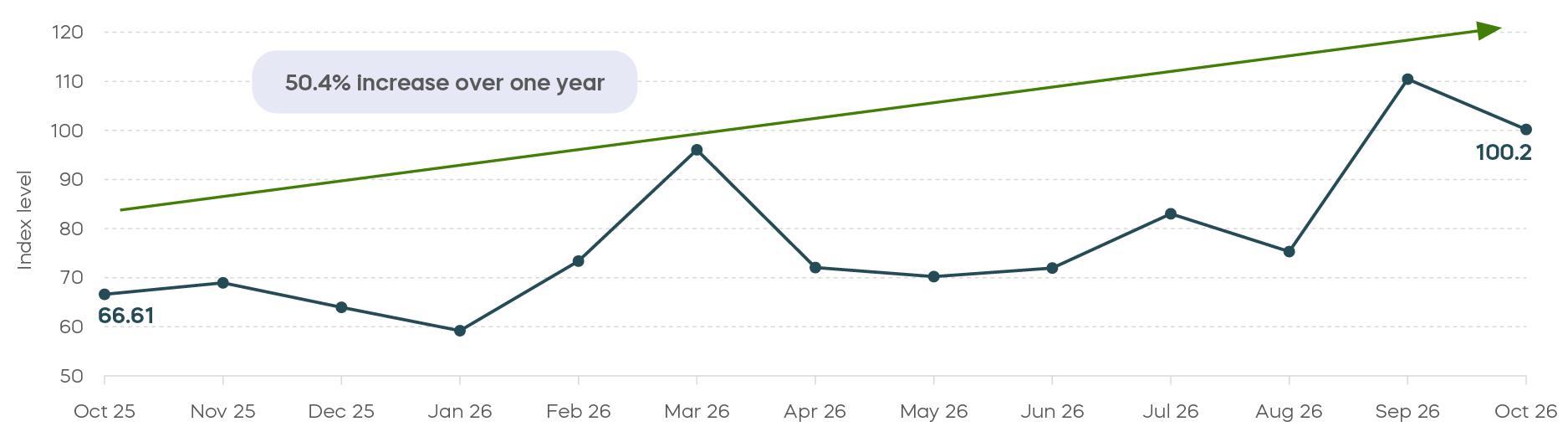 Source: Bloomberg, as of 11/3/2026. ICE BofA MOVE Index, October 30, 2025 to October 30, 2026. Month-end observations.
Higher readings could indicate expectations for larger swings, but not their direction. It’s important to note that the MOVE Index spans multiple maturities and does not isolate long-term Treasury volatility or predict yield direction.
ProShares offers inverse and leveraged ETFs that target daily long-term Treasury bond index returns for investors with views on rising or falling yields.
The choice of direction and leverage should reflect an investor’s outlook, time horizon and risk tolerance. Treasury bond prices generally fall as yields rise and rise as yields fall.
|
ETF |
Daily target1 |
Investment Objective |
|
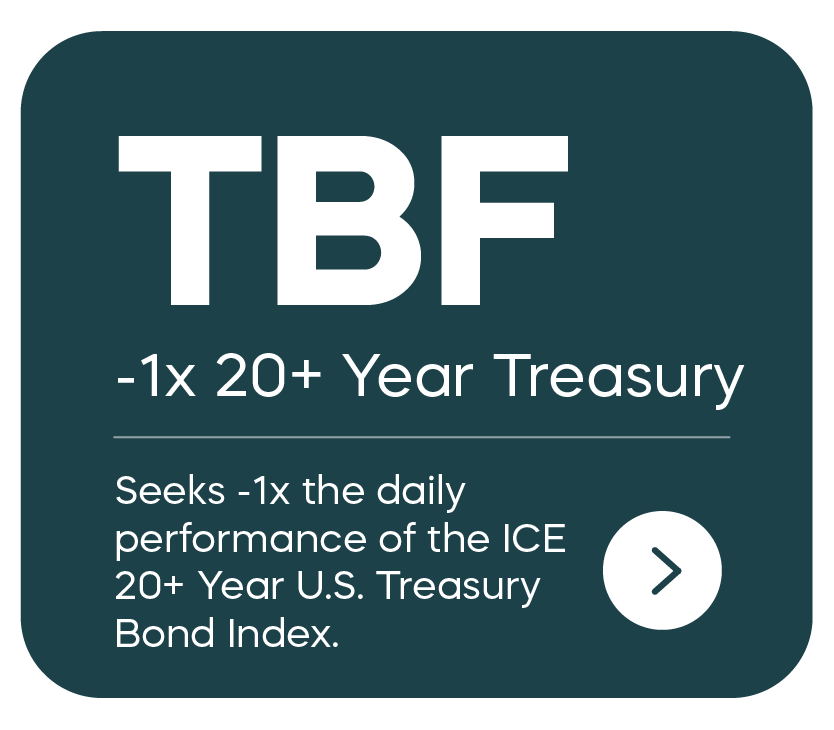
TBF |
-1x |
TBF seeks daily investment results, before fees and expenses, that correspond to the inverse (-1x) of the daily performance of the ICE U.S. Treasury 20+ Year Bond Index. |
|
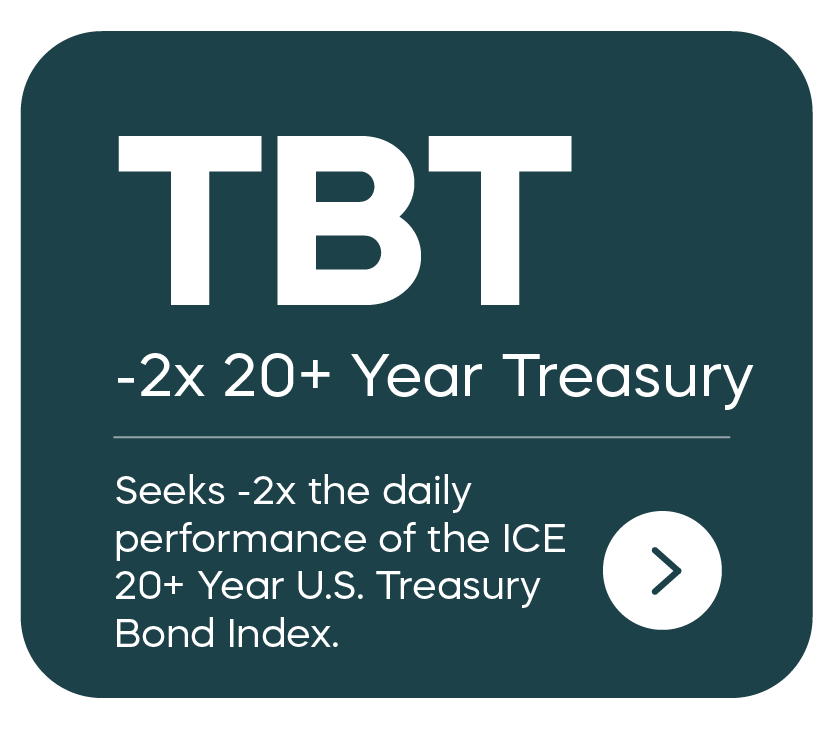
TBT |
-2x |
TBT seeks daily investment results, before fees and expenses, that correspond to two times the inverse (-2x) of the daily performance of the ICE U.S. Treasury 20+ Year Bond Index. |
|
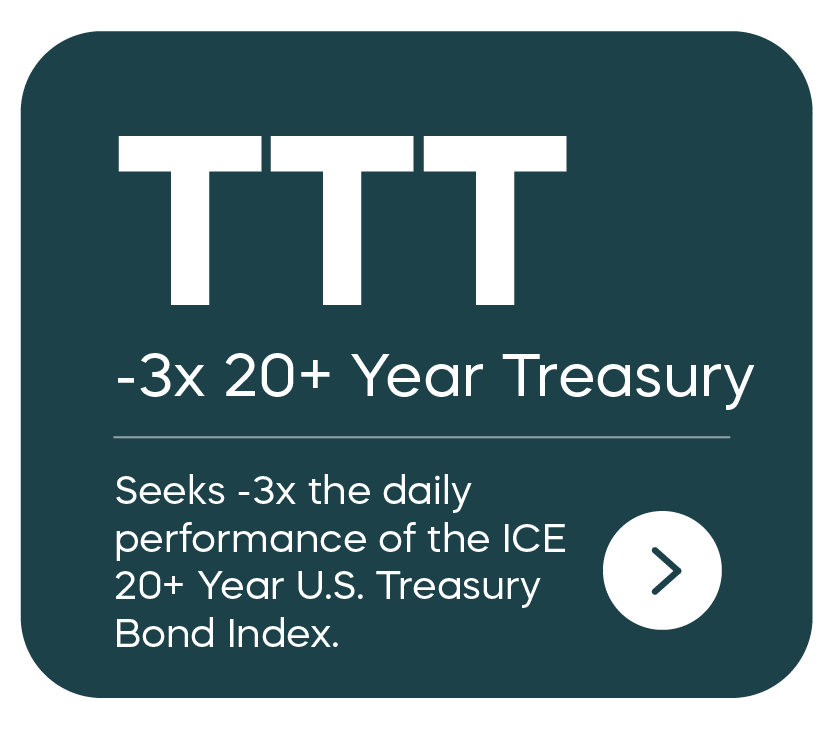
TTT |
-3x |
TTT seeks daily investment results, before fees and expenses, that correspond to three times the inverse (-3x) of the daily performance of the ICE U.S. Treasury 20+ Year Bond Index. |
|
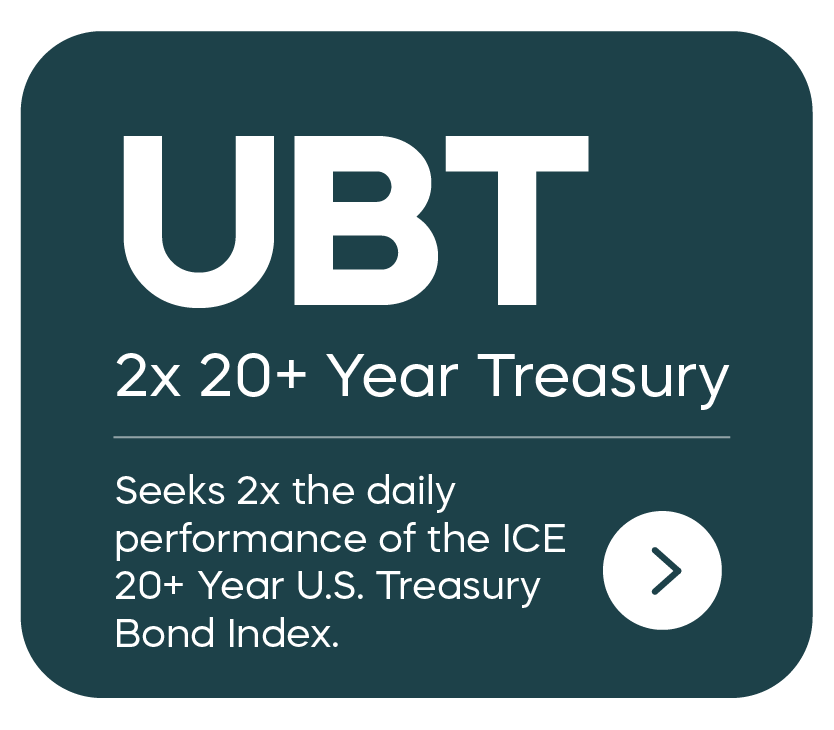
UBT |
+2x |
UBT seeks daily investment results, before fees and expenses, that correspond to two times (2x) the daily performance of the ICE U.S. Treasury 20+ Year Bond Index. |
The bottom line
With long-term yields exposed to competing economic forces and renewed volatility, it’s important to stay flexible in the current environment. ProShares’ inverse and leveraged Treasury ETFs may provide that flexibility, giving investors tools to express their tactical views on long-term Treasuries.
Learn More
TBF
Short 20+ Year Treasury
TBF seeks daily investment results, before fees and expenses, that correspond to two times the inverse (-1x) of the daily performance of the ICE U.S. Treasury 20+ Year Bond Index.
TBX
Short 7-10 Year Treasury
TBX seeks daily investment results, before fees and expenses, that correspond to the inverse (-1x) of the daily performance of the ICE U.S. Treasury 7-10 Year Bond Index.
TBT
UltraShort 20+ Year Treasury
TBT seeks daily investment results, before fees and expenses, that correspond to two times the inverse (-2x) of the daily performance of the ICE U.S. Treasury 20+ Year Bond Index.
TTT
UltraPro Short 20+ Year Treasury
TTT seeks daily investment results, before fees and expenses, that correspond to three times the inverse (-3x) of the daily performance of the ICE U.S. Treasury 20+ Year Bond Index.
Leveraged & Inverse
Leveraged & Inverse